So, for the past 7 days we have been on a trek around northern Peru! This means that there are lots of stories and photos to share. We are breaking our update up into two parts. This is part 1.
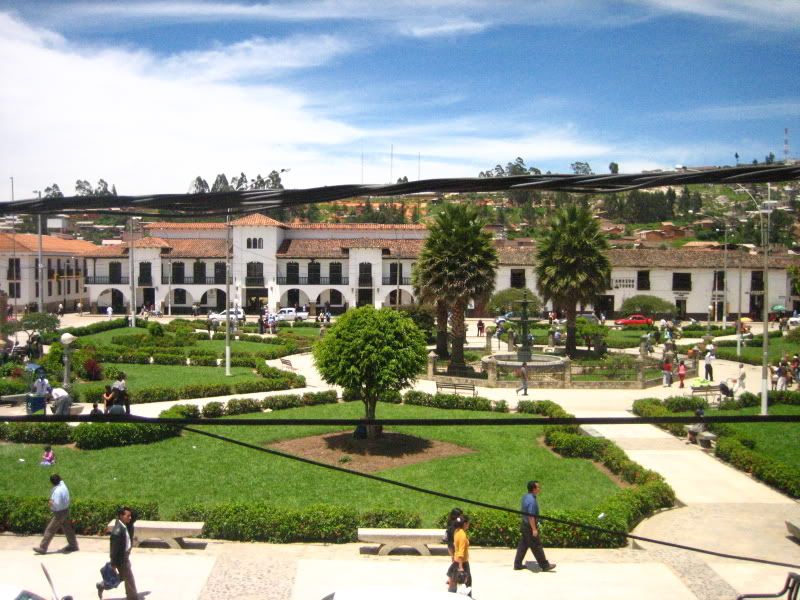
 We left Chachapoyas 8am in a taxi with our chauffeur, Hermando, and our guide, Carlos (who is only 18 years old, and takes out treks as his summer job!). Within 10 minutes we could tell that there was some sort of problem because the two were talking nervously upfront, and then we pulled over as our driver started searching through his papers. They didn´t find what they were looking for, so we kept driving, and then in another 5 minutes or so, our guide was explaining to us that we were going to get out of the taxi and walk down the road for a bit and that Hermando would meet us a bit later. Hmmm. As we walked down the road we approached what apeared to be a police check point (we had no money or passports though because we were told to leave anything of value behind) and Carlos was telling us that if the police man asked, we were just on a day hike in the valley. Hmmm again. The police man didnt believe Carlos so he explained the real story (we thi
 nk). We tried to keep up with their conversation, but they still talk way too quickly. What we think happened was that the taxis are not allowed to work outside their province, unless they have special permission, and Hermando didn´t have that permission. Thankfully we were allowed to continue on our trip, but we never really knew how they resolved the issue. A great way to start off.
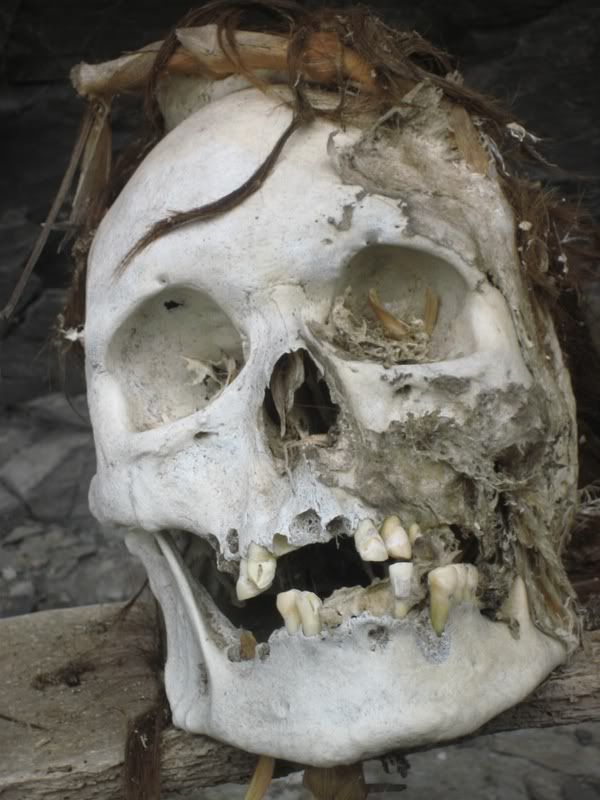
Our first stop was Karajiha, an old burial site for one small village of the Chachapoyians (this is a preInca culture about 800A.D., that was eventually overtaken by the Incas, and then the Spanish...this is not the modern city we were just coming from). We left the taxi behind and hiked for a good twenty minutes before arriving at the bottom of a small cliff face. Pearched on a small ledge in the middle of the cliff were six statues (each holding one mummy). They used to be people of great importance, and so were buried here so they could look out over the small valley and the village. It was really great to see something so ancient still intact and sitting amoung farmland (and we were the only people there too, an extra bonus).
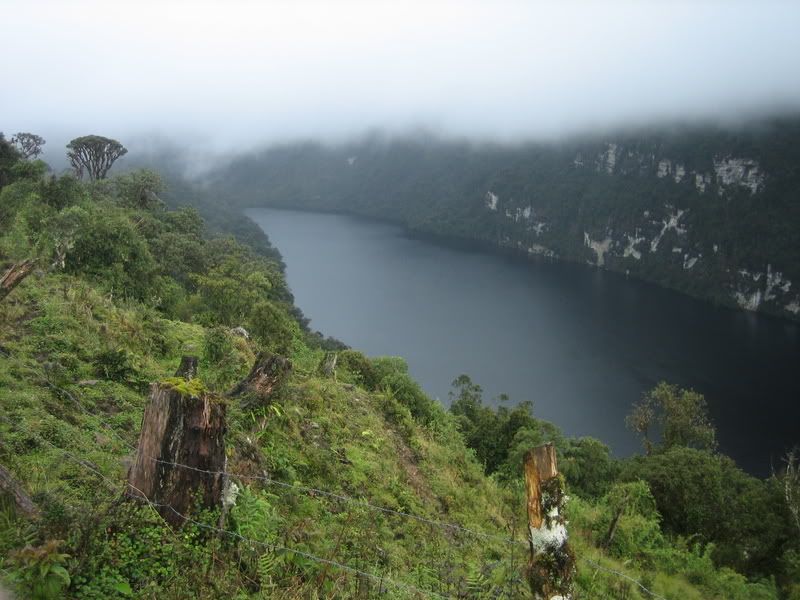
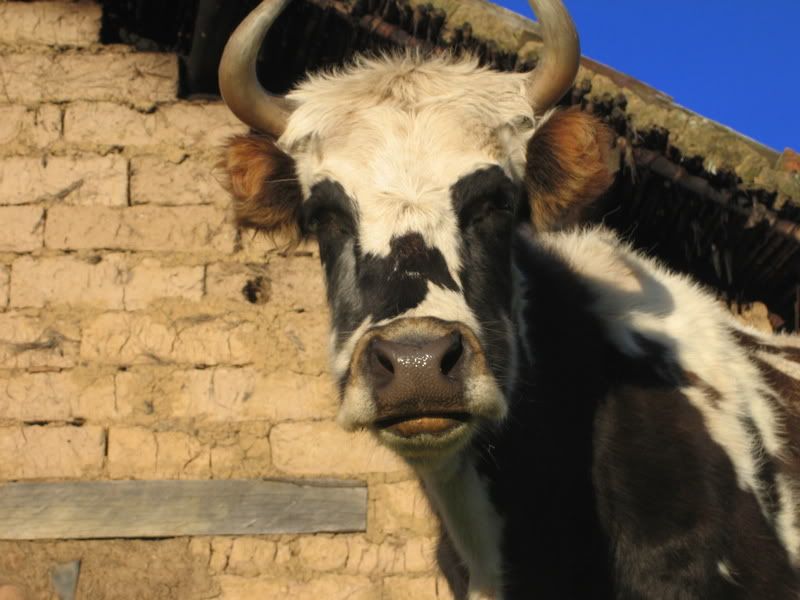
 We had lunch in the next small town and then headed up further into the mountains on the very bumpy dirt road. We even had to stop and pile out of the taxi to move a fallen tree off the road because the road crews had not been up that way in awhile. We were finally able to squeeze the taxi between the tree and the road´s edge (which dropped steeply into more cloud forest) and we continued down to the valley bottom, Valle de Balen. We left Hermando to breve the long drive back up the mou
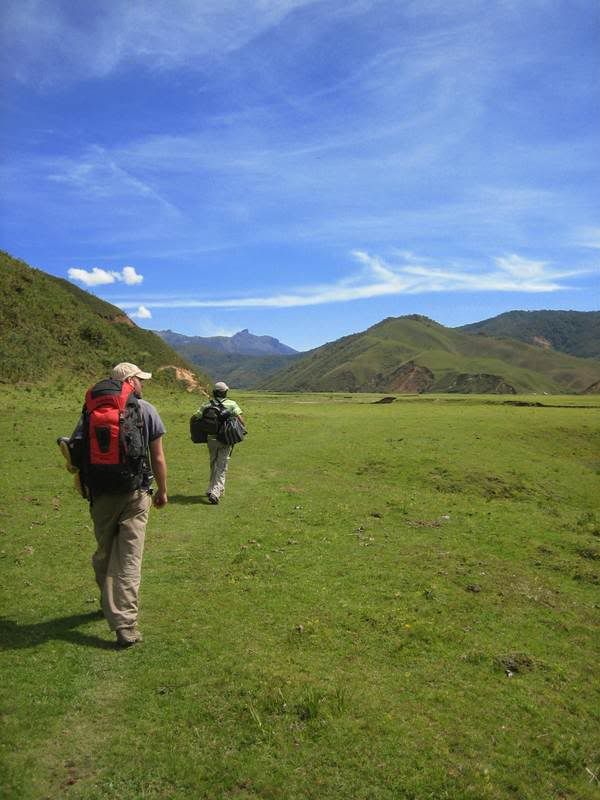
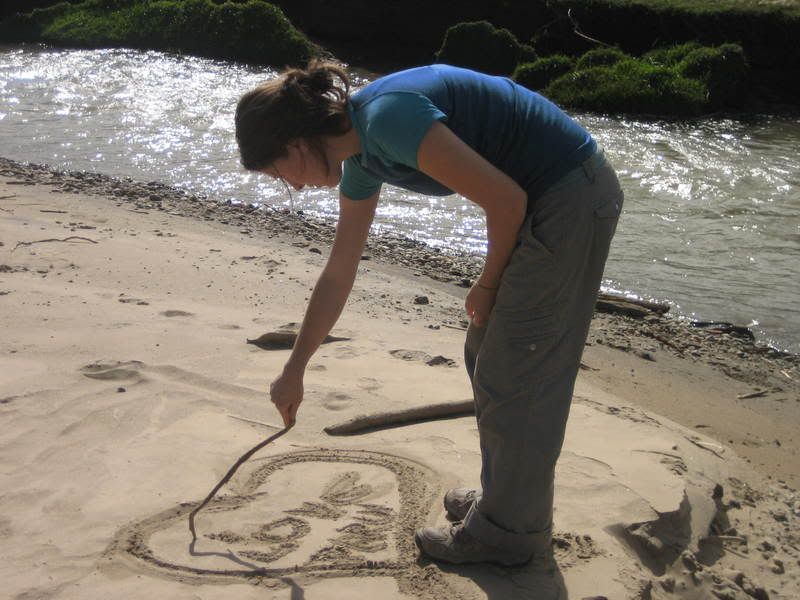
 ntain, and the three of us hiked down through the flood plains to the trekking company´s cabin. The valley was very green and had hundreds of cows and horses spread over its length, grazing between the meandering river. As Carlos went about fixing the cabin up and searching for Victor (a man who apparently looks out for the cabin while it´s not in use), we explored the rivers and streams and Colin tried to make friends with the cows.
That night after dinner we tried some Liquor de Leche, and Colin braved chewing coca. That whole process seemed very complicated, chew very slowly in your cheek and then add powdered chalk (or something else...language barrier) with this pin to the center of the chewed coca...Carlos was telling us his brother wasn´t careful and stabbed the pin through his cheek! Colin says it ´tasted like leaves´. The locals chew coca as they hike from village to home because with the long distances and high altitudes it helps the ir energy or blood flow but we´re not sure on the science of it quite yet. We played cards with Carlos and another valley friend, Arturo, and swapped teaching games... Go fish was the popular game of the evening. We slept in bunks in the cabin and layered our beds with five or six blankets, the valley is very cold at night, especially living in a mud and log cabin.
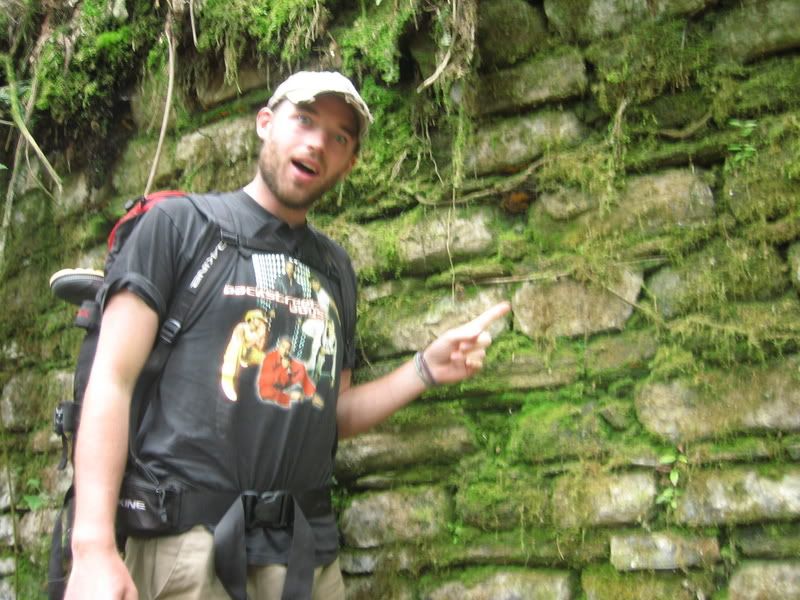
Day two of our trek we hiked from Valle de Balen to the much larger Gran Vilaya valley. We hiked across the flood plain and up into the mountains, following an old preInca road (basically an old rock pathway that has deteriorated over time). Carlos took us on a side trail into the jungle\cloud forest to see some ruins from another Chachapoian village, which have only been known for the past three or four years. Apparently the Valle de Balen has many similar ruins, but the re isn´t enough money to research or excavate right now. Where the houses once stood were now fallen circular walls with trees growing in them. We walked several trails and everywhere we looked were buildings, we felt like we were in an old Indiana Jones movie. We had lunch in the forest surrounded by all the trees and roak walls and then started on a two hour hike straight down the mountain. Our knees were crying by the end, but we reached the nest nights accomodations, a family´s house and where they grow coffee and raise chickens.
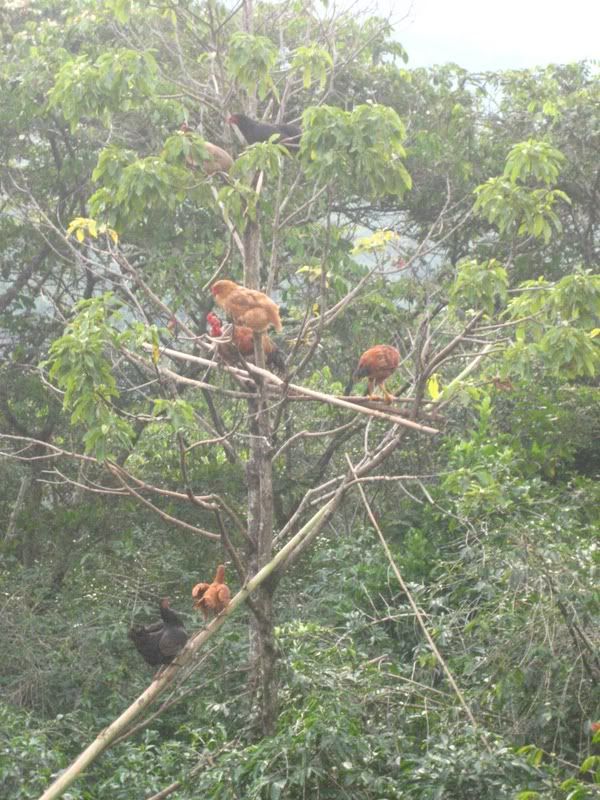
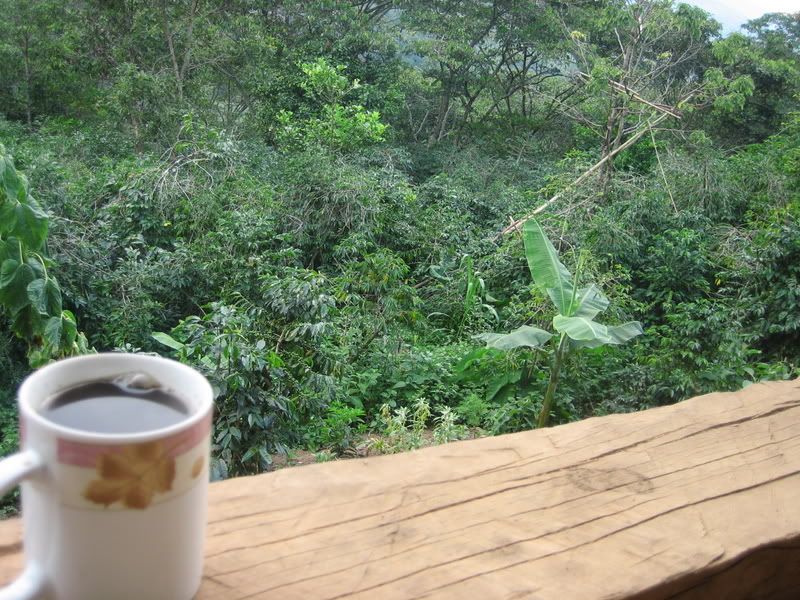
We got to try some of the coffee and (with a lot of sugar) was surprisingly good. The chickens were very amuzing too... at dusk, all the chickens wanted to roost in the top branches of one of the trees. The process of watching them flap and sqwack was histerical. We even took a photo.
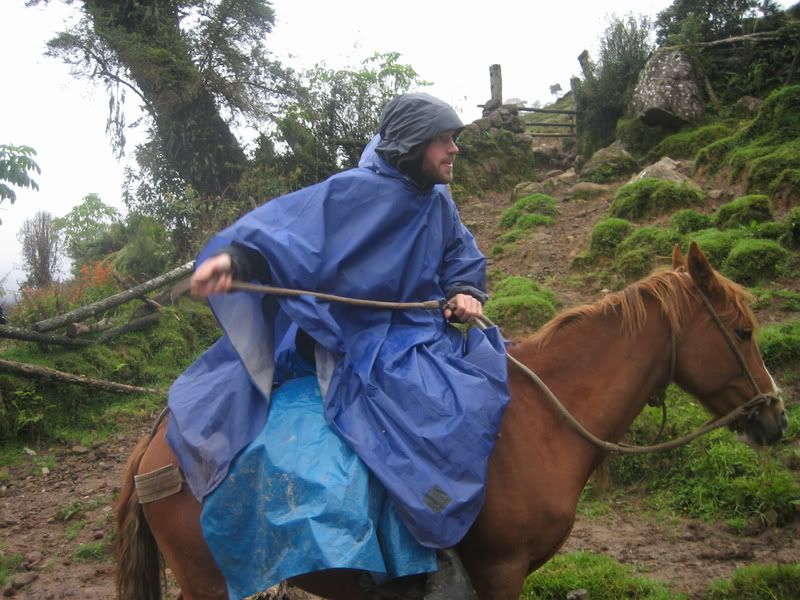
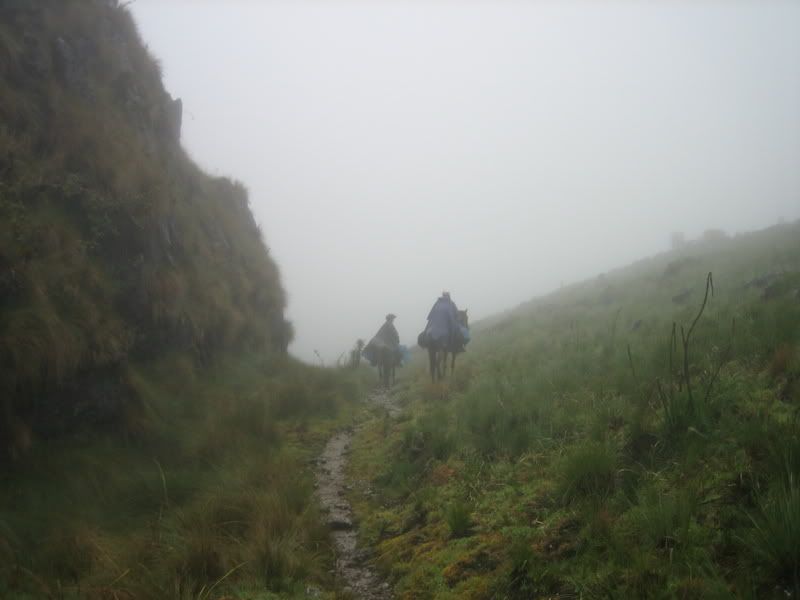
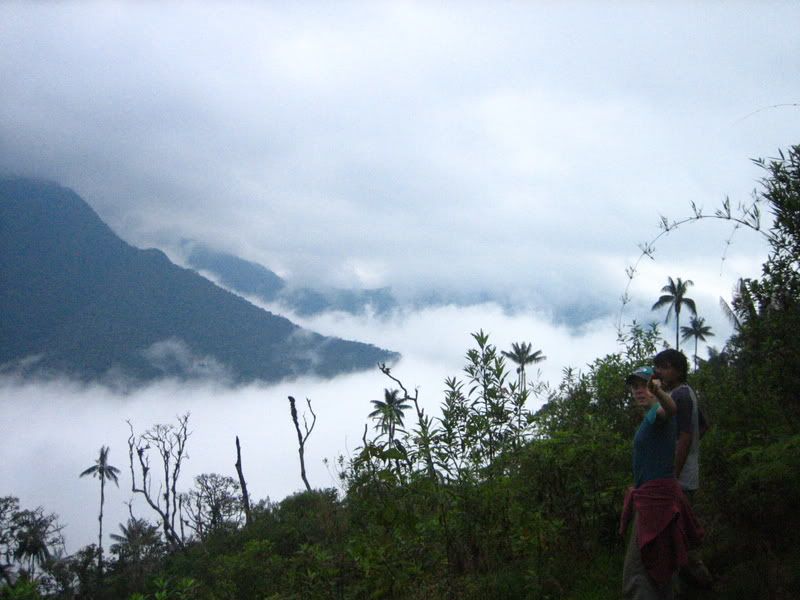
Day three we rode horses up out of the valley and then met up with Hermando, who took us the rest of the way to Maria. The large horse (which was brought for Colin originally) endded up carrying me and our two large backpacks, and Colin rode the slightly smaller horse with fewer things. Our guide and the horse driver walked and chewed coca as we climbed up through the cloud forests. The paths were very muddy and rocky and slippery, not ideal conditions for horseback ridding. We walked a few times in dangerous areas and to give ourselves and the horses a break. We reached another site of Chachapoian ruins and explored the old village. It was almost identical to the first village. A five minute walk from the ruins is a house where we ate lunch, they have convieniently named the spot Launch after the english word. We climbed back on the horses after our feast and continued the climb. Within the last five minutes of the ride (as we could see the top) the rocks were getting steeper, more slippery, and we could tell the animals were having more trouble than earlier, but we kept ridding to the insistance of Carlos and  the horse driver. As I became more and more nervous, and my horse kept slipping, eventually his back legs comepletely slipped and he fell, but the horse driver was there in miliseconds pushing the horse up the rock. As I recovered and turned around, Colin´s horse began slipping and fell and Colin fell off his horse and somersalted backwards twice down the rock!!!!! He only scratched his hand, and the horse was alright too, but he walked up the last two minutes, and I was quick to jump off my horse at the top of the hill. Woah.
Our taxi was not at the top to meet us, so we began walking down the road, and Carlos eventually caught us a ride to the next small village where he called to find our taxi. As he was talking on the phone, Hermando came zooming up the hill and we flagged him down and were all piled in the car within minutes to Maria, where we ate dinner, showered, and slept slept slept.
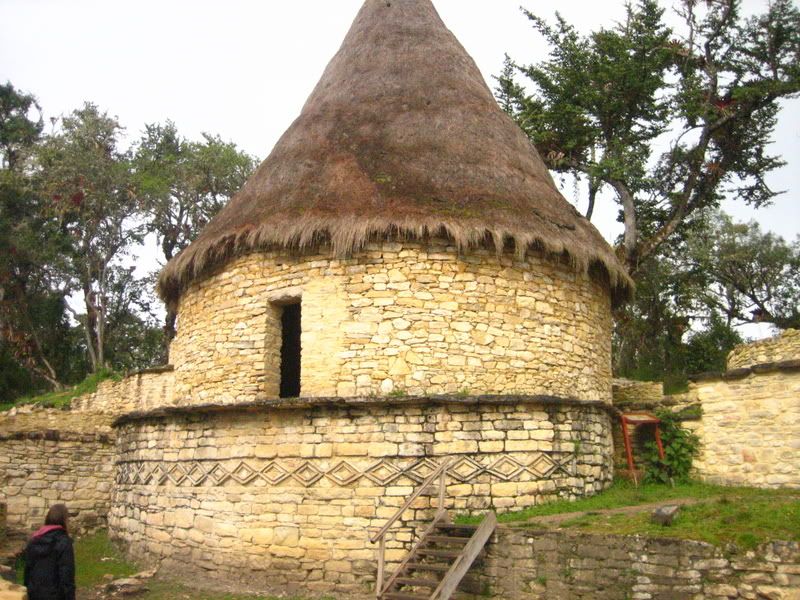
Day four started early because we had so much ground to cover that day. W e headed off to Kuelap, yet another Chachapoian village, but this one has been excavated and is being restored, and is sitting up on the highest mountain and overlooking a cliff. It is built on a large base, which only has three entrances. Anyone army wanting to attack would have to file through the long entrance ways single file and risk being pelted upon by thrown rocks from above. It being still before 7am, Carlos tried to sneak us through the impressive first entrance, which has been under construction for the past two years and is off limits. We almost made it through, but were caught, so had to walk all the way along the village´s outside wall to the next long entrance way. After c
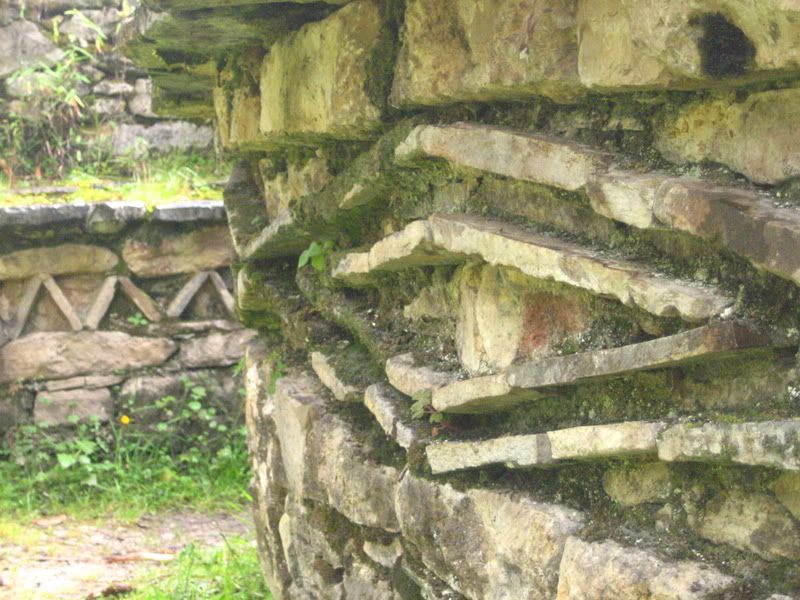
 limbing up the entrance to the top of the base, we explored the restored village, the houses (with kitchens and exterior balconies), and were able to see the village without the jungles that the other two sites had. It was pretty amazing, and the more famous ruins of the area.
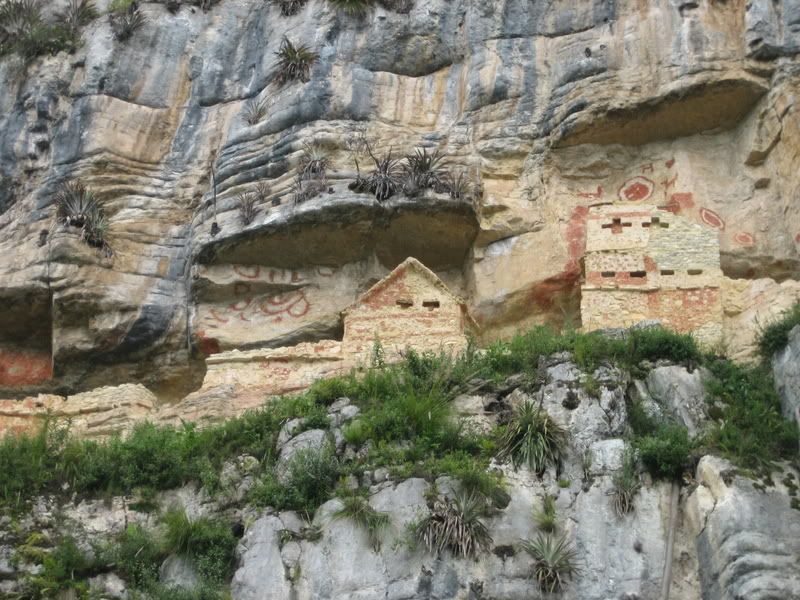
We had breakfast then had a long drive to our next site, Revash, another burial site. We hiked up for about an hour to the cliff face where we saw some house-like structures pearched on the cliff face. Inside each of these ´houses´ there were 20-30 mummied bodies, and along the whole cliff face were several other buirial sites. The Chachapoians buried their dead on the cliff faces to overlook their villages and so the bodies were closer to the sun (also to protect them from robbers). Sadly, when this site was discovered, the archaeologists took their discoveries back to their countries, so now the mummies, ceramics and other findings are in museums in Vienna, Italy, and LaLouvres in France. Peru doesn´t have the money to buy back these things. We ate some of the best oranges everWe hiked back down to the taxi and drove off to Leymebamba, several hours away and had lunch at 4:30. From there we said ciao to Carlos, because the next three days we were to have another guide. We skipped dinner, having just eaten, and packed for a 7am departure for the next day.
The first four days of the trek we had great weather, lots of sun and saw tonnes of old preInca sites (we are starting not to like the Incas actually because they came and took over everything). Sadly the photos aren´t loading fast enough and we leave for the coast in a few hours...be patient and they´ll be here soon!
Later gaitors!